
Call us now :
 Send Inquiry
 Send Inquiry
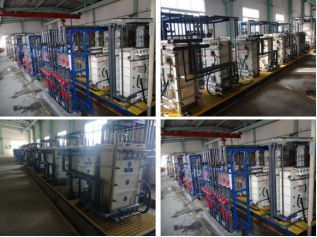
Preparation of organic acids by bipolar membrane electrodialysis
Preparation of organic acids by bipolar membrane electrodialysis Specification
- Product Output
- Organic acids (such as lactic acid, acetic acid), corresponding alkaline and acidic solutions
- Typical Conversion Efficiency
- 8095% depending on feed and operation conditions
- Process Description
- Bipolar membrane electrodialysis involves the use of a stack of alternating anion and cation-exchange membranes, with bipolar membranes to split water molecules into H+ and OH-, facilitating the separation of organic acids from their salt solutions.
- Current Density
- 50500 A/m
- Electrolyte
- Dilute acid and base solutions
- Advantages
- No need for chemical addition for acidification or neutralization, high product purity, reduced byproduct formation, environmentally friendly process.
- Product Purification
- Organic acid collected in acid compartment, base in base compartment; high purity due to selective ion transport
- Cell Stack Configuration
- Alternating arrangement of anion and cation exchange membranes with bipolar membranes at set intervals
- Maintenance
- Periodic cleaning required; membranes are durable under proper operation
- Power Consumption
- Typically 0.52.5 kWh/kg acid produced
- Application
- Preparation of organic acids
- Operating Temperature
- 1540C
- Scalability
- Applicable for lab scale to industrial scale production
- Construction Material
- Stack frames and spacers made from chemically resistant polymers (e.g., PP, PVDF); electrodes usually titanium with noble metal coating.
- Operating Principle
- Application of electric field across the membrane stack causes water dissociation and ion migration to produce purified organic acids and bases.
- Automation Compatibility
- Can be integrated with automated process control systems
- Reactants Input
- Organic acid salt solution (e.g., sodium lactate, sodium acetate), water
- Operating Voltage Range
- 210 V per cell pair, depending on feed composition and stack design
- Membrane Types
- Anion exchange membrane, cation exchange membrane, bipolar membrane
- Organic Acid Recovery Rate
- Up to 95%
Preparation of organic acids by bipolar membrane electrodialysis Trade Information
- Payment Terms
- Telegraphic Transfer (T/T), Letter of Credit (L/C)
- Sample Available
- No
- Main Export Market(s)
- Asia, Australia, Central America, North America, South America, Eastern Europe, Western Europe, Middle East, Africa
- Main Domestic Market
- All India
- Certifications
- Ion exchange method is used in the downstream processing of traditional organic acid fermentation production. The ion exchange method is to make the organic acid salt solution through the acid type cation exchange column, in which the metal ion is exchanged with the hydrogen on the cation exchange resin, so as to convert the organic acid. The ion exchange column used in this method is large in volume, the ion exchange resin needs to be regenerated repeatedly, the operation is complicated, and a lot of acid base and washing water are consumed, and a lot of waste liquid is generated. If organic acids are produced directly from the fermentation liquid by bipolar membrane, the organic acids in the fermentation liquid are converted to organic acids by means of H+ of the bipolar membrane, and the dissociated OH- is combined with the cations in the fermentation liquid to form a base, which is then used for fermentation. This greatly reduces waste discharge, environmental pollution, chemical raw materials and energy consumption, and has significant industrial application value and environmental benefits; The process is simple, the product recovery rate and purity are high, and the economic benefits brought by the improvement of product quality are more significant. Bipolar membrane electrodialysis process has the advantages of high integration and energy saving, and has a wide range of application prospects in chemical production, biotechnology, food industry, environmental protection and other fields, such as: Organic salt production organic acid base/inorganic salt production inorganic acid base Ferrate preparation Chemical synthesis in organic phase Treatment of uranium processing wastewater Regeneration of sodium sulfate in rayon production Gas absorption Extraction and transformation of organic acid salts from fermentation broth Precipitation separation of soybean protein isolate Caseinic acid production
Preparation of organic acids by bipolar membrane electrodialysis About
Bipolar membrane is a new type of ion exchange composite membrane. The electrodialysis technology of bipolar membrane is applied to prepare the corresponding acid (HX) and base (MOH) from salt solution (MX). Under the action of direct current electric field, the salt anion (X-) enters the acid chamber through the anion exchange membrane, and then produces acid (HX) from the hydrogen ion dissociated from the bipolar membrane. The salt cation (M ) enters the alkali chamber through the cation exchange membrane, where it forms a base (MOH) with hydroxide ions dissociated from the bipolar membrane.
How Bipolar Membrane Electrodialysis Works
The process uses a series of anion, cation, and bipolar membranes arranged alternately. When an electric field is applied, water splits into H+ and OH- ions at the bipolar membranes, enabling the transformation of organic acid salts into purified organic acids in the acid compartment. The method ensures selective ion transfer, producing organic acids and bases in separate compartments.
Versatility and Scalability
Bipolar membrane electrodialysis is designed for flexibility, catering to both small-scale laboratory requirements and large-scale industrial production. Its modular design and compatibility with automated process controls make it adaptable for diverse applications, including research and mass manufacturing of high-purity organic acids.
Operational Excellence and Durability
Operating at 2-10 V per cell pair and 15-40C, the system maintains high conversion efficiency while minimizing power consumption. Made from chemically resistant polymers and noble-metal-coated titanium electrodes, it delivers consistent performance with only periodic membrane cleaning required, ensuring longevity and low maintenance.
FAQ's of Preparation of organic acids by bipolar membrane electrodialysis:
Q: How does bipolar membrane electrodialysis separate organic acids from their salts?
A: Bipolar membrane electrodialysis separates organic acids by applying an electric field across a stack of alternating anion, cation, and bipolar membranes. The bipolar membranes split water into hydrogen and hydroxide ions, enabling the selective migration of ions and converting organic acid salts into their respective acids and bases without additional chemicals.Q: What are the main advantages of using bipolar membrane electrodialysis for organic acid preparation?
A: This process offers several benefits, including high product purity, reduced byproduct formation, no need for chemical additives for acidification or neutralization, and an environmentally friendly operation. It also delivers high conversion efficiency and recovery rates, along with scalability for both laboratory and industrial applications.Q: When should periodic maintenance be performed on the membrane system?
A: Periodic cleaning should be scheduled based on the operating conditions and feed composition to maintain optimal performance and extend membrane life. Typically, regular maintenance ensures durability and prevents performance decline due to fouling or scaling.Q: Where is this technology commonly applied?
A: Bipolar membrane electrodialysis is widely used in the chemical, food, and pharmaceutical industries for the production and purification of organic acids, such as lactic and acetic acids, especially where high purity and environmental considerations are priorities.Q: What types of feed solutions are suitable for this process?
A: The system is designed for organic acid salt solutions, such as sodium lactate or sodium acetate, combined with water. The method is versatile in handling various organic acid salts to produce corresponding acids efficiently.Q: How energy efficient is the process for producing organic acids?
A: Power consumption typically ranges from 0.5 to 2.5 kWh per kilogram of acid produced, depending on the feed composition, stack design, and operating conditions, making it a cost-effective and energy-efficient solution for organic acid production.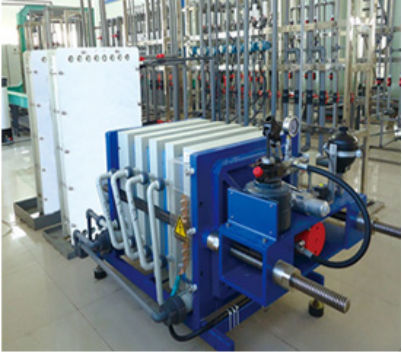

Tell us about your requirement

Price:
Quantity
Select Unit
- 50
- 100
- 200
- 250
- 500
- 1000+
Additional detail
Mobile number
Email

More Products in Application technology of ionic membrane electrodi Category
Polycrystalline silicon industry acid treatment technology
Price 1000.0 USD ($) / Unit
Minimum Order Quantity : 1 Unit
Application technology of bipolar membrane electrodialysis
Price 1000.0 USD ($)
Minimum Order Quantity : 1
Diffusion Dialysis - Waste Alkali Recovery Technology For Separation and Recovery of Acid/ Alkali Waste Solutions
Price 1000.0 USD ($)
Minimum Order Quantity : 1

 Send Inquiry
Our Products
- Chemical Technology Services and Consulting
- Industrial Membrane
- Factory Construction
- Water Treatment Plant
- Production technology of industrial chemicals
- Application technology of ionic membrane electrodi
- Water Treatment Technology
- Ion Membrane Technique
- Industrial Plant
- Industrial Chemical
- Production Processing Equipment
- Procurement Requirement

Room 1209, Block 14, Hengdafeicuihuating, No 82 Beixiwu Road, Sibaoshan Sub-district,Zibo - 250200, Shandong Sheng, China

Ms. Lynette
(Manager)
Mobile :+8613376439539
 Send Inquiry
Developed and Managed by Infocom Network Private Limited.
