Call us now :
 Send Inquiry
 Send Inquiry
Electrodialysis wastewater treatment technology
Electrodialysis wastewater treatment technology Specification
- PH Range
- 2-12
- Control Panel
- Included
- Membrane Type
- Ion Exchange Membrane
- Usage
- Industrial Effluent, Brackish Water, Process Water Recycling
- Flow Rate
- Customizable as per requirement
- Operating Temperature Range
- 5°C to 45°C
- Automation Grade
- Automatic
- Power Supply
- 220V/380V, 50Hz
- Maintenance
- Low
- Membrane Lifespan
- 2-5 Years
- Installation Required
- Yes
- System Type
- Modular
- Treatment Process
- Electrodialysis
- Application
- Wastewater Treatment
- Operating Pressure
- Atmospheric
- Recovery Rate
- Up to 90%
- Product Name
- Electrodialysis Wastewater Treatment Technology
Electrodialysis wastewater treatment technology Trade Information
- Payment Terms
- Letter of Credit (L/C), Telegraphic Transfer (T/T)
- Sample Available
- No
- Main Export Market(s)
- Asia, Australia, Central America, North America, South America, Eastern Europe, Western Europe, Middle East, Africa
- Main Domestic Market
- All India
- Certifications
- Wastewater treatment Applications: -Acid waste water process to achieve efficient recovery of acids, valuable metals and water resources; -Ammonium chloride wastewater treatment process to achieve efficient recovery of ammonium chloride and water resources; -Electroplating wastewater treatment process, to achieve wastewater treatment and recycling or zero waste water discharge process; -Zirconia production wastewater treatment and recycling; -Zero discharge of catalyst production wastewater, raw water through sand filtration and ultrafiltration into the electrodialysis system, fresh water through reverse osmosis system to get workshop reuse water, concentrated water reached 20% into the evaporation system to achieve zero discharge; -Rare earth industry wastewater treatment; -Pharmaceutical industry wastewater treatment;
About Electrodialysis wastewater treatment technology
electrodialysis
Electrodialysis process is a combination of electrochemical process and dialysis diffusion process. Driven by the external direct current electric field, using the selective permeability of the ion exchange membrane (that is, the cation can pass through the cation exchange membrane, the anion can pass through the anion exchange membrane), the negative and the cation move to the anode and the cathode, respectively. In the process of ion migration, if the fixed charge of the membrane is opposite to the charge of the ion, the ion can pass through; If they have the same charge, the ions are repelled, thus achieving the purpose of solution desalination, concentration, refining or purification.
Efficient and Reliable Ion Removal
The electrodialysis process efficiently removes dissolved ions from wastewater using ion exchange membranes. This approach ensures high recovery rates and consistent water quality, accommodating challenging conditions across a broad pH and temperature range. Ideal for industrial users, it helps manage large volumes and variable influents with minimal operational oversight.
Modular System with Customizable Capacity
Designed for flexibility, the modular system can be tailored to specific site requirements and adapted as water treatment needs evolve. With automatic operation and a user-friendly control panel, installation and daily use are significantly simplified, supporting scalable solutions for growing industrial demands.
FAQ's of Electrodialysis wastewater treatment technology:
Q: How does Electrodialysis Wastewater Treatment Technology work?
A: This technology utilizes ion exchange membranes combined with an electric field to selectively remove dissolved contaminants from wastewater. The process separates positively and negatively charged ions, enabling effective treatment and recycling of industrial effluent, brackish water, or process water.Q: What are the operating conditions for this electrodialysis system?
A: The system is designed to function optimally within a temperature range of 5C to 45C and can handle wastewater with pH values between 2 and 12. It operates at atmospheric pressure and is suitable for various industrial environments.Q: When is electrodialysis recommended over other treatment methods?
A: Electrodialysis is especially beneficial when there is a need for high recovery rates (up to 90%) and selective ion removal from water streams with diverse ionic compositions, such as industrial wastewater with varying salinity and contaminants.Q: Where can Electrodialysis Wastewater Treatment Technology be applied?
A: This technology is suitable for industrial effluent treatment, brackish water desalination, and process water recycling applications. It is widely used across industries in India requiring reliable ion removal and water reuse.Q: What are the benefits of using a modular electrodialysis system?
A: A modular design allows easy scaling of capacity and tailored configurations. It supports flexible installations, simplified maintenance, and cost-effective expansions, adapting to evolving operational needs with minimal downtime.Q: How does low maintenance and long membrane lifespan contribute to efficiency?
A: With a membrane lifespan of 2 to 5 years and low maintenance requirements, operational costs and downtime are significantly reduced. This ensures consistent productivity and reliability for continuous industrial operations.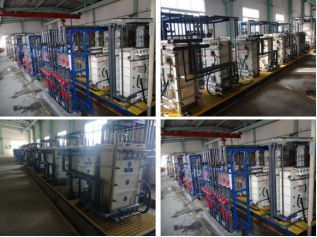

Tell us about your requirement

Price:
Quantity
Select Unit
- 50
- 100
- 200
- 250
- 500
- 1000+
Additional detail
Mobile number
Email

More Products in Application technology of ionic membrane electrodi Category
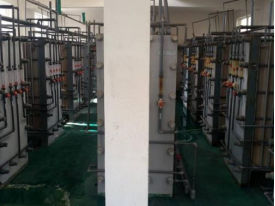
Polycrystalline silicon industry acid treatment technology
Price 1000.0 USD ($) / Unit
Minimum Order Quantity : 1 Unit
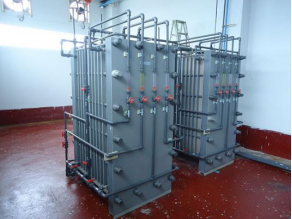
Diffusion Dialysis - Waste Alkali Recovery Technology For Separation and Recovery of Acid/ Alkali Waste Solutions
Price 1000.0 USD ($)
Minimum Order Quantity : 1
Application technology of bipolar membrane electrodialysis
Price 1000.0 USD ($)
Minimum Order Quantity : 1

 Send Inquiry
Our Products
- Chemical Technology Services and Consulting
- Industrial Membrane
- Factory Construction
- Water Treatment Plant
- Production technology of industrial chemicals
- Application technology of ionic membrane electrodi
- Water Treatment Technology
- Ion Membrane Technique
- Industrial Plant
- Industrial Chemical
- Production Processing Equipment
- Procurement Requirement

Room 1209, Block 14, Hengdafeicuihuating, No 82 Beixiwu Road, Sibaoshan Sub-district,Zibo - 250200, Shandong Sheng, China

Ms. Lynette
(Manager)
Mobile :+8613376439539
 Send Inquiry
 Call Me Free
Developed and Managed by Infocom Network Private Limited.
