Call us now :
 Send Inquiry
 Send Inquiry
Diffusion Dialysis - Waste Alkali Recovery Technology For Separation and Recovery of Acid/ Alkali Waste Solutions
Diffusion Dialysis - Waste Alkali Recovery Technology For Separation and Recovery of Acid/ Alkali Waste Solutions Specification
- Construction Material
- PVC, FRP, PP options for corrosion resistance
- Waste Reduction Potential
- Significantly reduces waste disposal volume and costs
- Installation
- Onsite integration in-process lines
- Technology
- Diffusion Dialysis using anion exchange membranes
- Membrane Type
- Anion exchange membrane
- Material Processed
- Acid waste, alkali waste, mixed acid/alkali waste solutions
- Application
- Separation and recovery of acid/alkali waste solutions
- Operating Temperature
- 10°C to 50°C
- Automation
- Optional PLC-based automated operation
- System Capacity
- Scalable from 0.5 m³/day to >50 m³/day
- Product Name
- Diffusion Dialysis - Waste Alkali Recovery Technology
- Function
- Selective separation and recovery of acid or alkali from waste streams
- Installation Space Requirement
- Compact footprint, customizable design
- Typical Industries
- Metal finishing, chemical manufacturing, surface treatment, battery manufacturing
- Compliance
- Helps industries meet environmental discharge norms
- pH Range Processed
- 1 to 14 (suitable for strong acids and alkalis)
- Flow Rate
- Customized as per application requirements
- Design Type
- Modular, skid-mounted units available
- Power Requirement
- Low, typically 0.5-2 kWh/m³ (membrane process is non-thermal)
- Membrane Lifetime
- Typically 2-3 years depending on operating conditions
- Recovery Efficiency
- Up to 90% of usable acid/alkali recovered depending on feed solution
Diffusion Dialysis - Waste Alkali Recovery Technology For Separation and Recovery of Acid/ Alkali Waste Solutions Trade Information
- Payment Terms
- Telegraphic Transfer (T/T), Letter of Credit (L/C)
- Sample Available
- No
- Packaging Details
- The whole device is a series of structural units composed of a certain number of membranes. Each unit has a cationic homogeneous membrane separated into a dialysis chamber and a diffusion chamber. Countercurrent operation is adopted. When the waste lye and the receiving liquid (tap water) are passed into both sides of the cationic homogeneous membrane, the concentration of alkali and its salt on the waste lye side is much higher than that on the water side. However, the membrane has selective permeability to cations, so under the effect of the concentration difference, the cations on the waste alkali side are attracted and enter the water side smoothly through the membrane pore channel. At the same time, according to the requirements of electric neutrality, anions are also included, because the hydration radius of OH- is relatively small, and the charge is less. Other anions have a larger hydration radius and more charge, so OH- will preferratively pass through the membrane, so that the alkali in the waste liquid will be separated.
- Main Export Market(s)
- Asia, Australia, Central America, North America, South America, Eastern Europe, Western Europe, Middle East, Africa
- Main Domestic Market
- All India
Diffusion Dialysis - Waste Alkali Recovery Technology For Separation and Recovery of Acid/ Alkali Waste Solutions About
Diffusion dialysis recovery of waste alkali and recovery of waste acid are the application of dialysis principle, are driven by concentration difference, the difference is that used as diffusion dialysis membrane is not anion exchange membrane but cation exchange membrane. As shown in the figure below, when both sides of the cationic homogeneous membrane pass into the waste lye and the receiving solution (tap water), the concentration of alkali and its salt on the waste lye side is much higher than that on the water side. Therefore, due to the existence of concentration gradient, the waste alkali and its salt have a tendency to penetrate the diffusion chamber. However, the membrane is selective and will not allow each ion to pass through with equal opportunities. First of all, the cation exchange membrane skeleton itself is negatively charged, which has the characteristics of attracting positively charged hydrated ions and repelling negatively charged hydrated ions in solution. Therefore, under the effect of the concentration difference, the cation on the waste alkali side is attracted and smoothly enters the water side through the membrane pore channel. At the same time, according to the requirements of electric neutrality, negatively charged ions will also be included, because the hydration radius of OH- is relatively small, the charge is less; Other anions have larger radii, so OH- will preferentially pass through the membrane, so that the alkali in the waste solution will be separated.
Innovative Acid and Alkali Recovery
Diffusion Dialysis enables the selective separation and recovery of usable acids and alkalis from industrial waste solutions through specialized anion exchange membranes. This technology not only conserves resources but helps industries minimize environmental impact and comply with discharge regulations.
Flexible and Scalable Design
Designed for a wide range of process requirements, the system's modular and skid-mounted units provide versatile installation options. From compact footprints to customized flow rates, it easily integrates with on-site process lines, supporting capacities from small pilot operations to full-scale industrial plants.
Efficient and Cost-Saving Operation
By efficiently recovering up to 90% of valuable acids or alkalis, Diffusion Dialysis reduces both disposal volumes and chemical purchase costs. Its low power consumption and durable materials ensure long-term usability, while optional PLC automation streamlines process management and reduces operator intervention.
FAQ's of Diffusion Dialysis - Waste Alkali Recovery Technology For Separation and Recovery of Acid/ Alkali Waste Solutions:
Q: How does Diffusion Dialysis recover acids and alkalis from waste solutions?
A: The system employs anion exchange membranes that selectively separate usable acids or alkalis from waste streams. This membrane-based process enables the diffusion of acid and alkali ions, allowing their recovery while leaving contaminants behind.Q: What industries can benefit from installing this technology?
A: Industries such as metal finishing, chemical manufacturing, surface treatment, and battery production gain significant value from Diffusion Dialysis by recovering chemicals, reducing hazardous waste, and meeting environmental discharge standards.Q: When should a facility consider using Diffusion Dialysis for waste solution management?
A: Facilities facing high volumes of acidic or alkaline waste, stringent environmental regulations, or escalating disposal costs should consider implementing Diffusion Dialysis for effective chemical recovery and compliance.Q: Where is the system typically installed within an industrial setup?
A: Diffusion Dialysis systems are designed for on-site integration within process lines, either as standalone modules or modular skid-mounted units. Their compact, customizable footprint allows flexible placement according to the facility's space requirements.Q: What is the process for operating and maintaining the system?
A: Operation is straightforward, with optional PLC-based automation for control and monitoring. Maintenance involves periodic membrane checks and replacement every 2-3 years depending on operating conditions, alongside standard system inspections.Q: How does using this technology benefit waste management and operational costs?
A: Diffusion Dialysis significantly reduces the volume of hazardous waste requiring disposal, cuts chemical purchase costs through recovery, and aids compliance with environmental norms, collectively resulting in substantial cost savings and improved sustainability.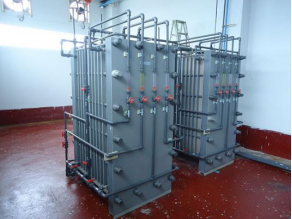


Tell us about your requirement

Price:
Quantity
Select Unit
- 50
- 100
- 200
- 250
- 500
- 1000+
Additional detail
Mobile number
Email

More Products in Application technology of ionic membrane electrodi Category
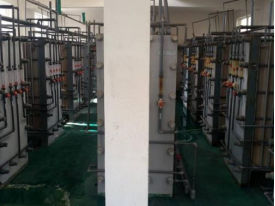
Polycrystalline silicon industry acid treatment technology
Price 1000.0 USD ($) / Unit
Minimum Order Quantity : 1 Unit
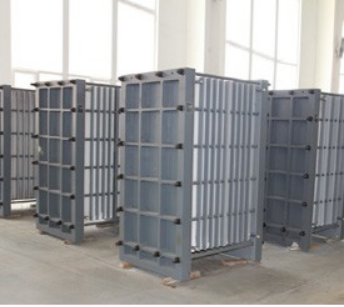
Industrial Diffusion Dialysis - Waste Acid Recovery Technology
Price 1000.0 USD ($)
Minimum Order Quantity : 1
Application technology of bipolar membrane electrodialysis
Price 1000.0 USD ($)
Minimum Order Quantity : 1
Preparation of organic acids by bipolar membrane electrodialysis
Price 1000.0 USD ($)
Minimum Order Quantity : 1

 Send Inquiry
Our Products
- Chemical Technology Services and Consulting
- Industrial Membrane
- Factory Construction
- Water Treatment Plant
- Production technology of industrial chemicals
- Application technology of ionic membrane electrodi
- Water Treatment Technology
- Ion Membrane Technique
- Industrial Plant
- Industrial Chemical
- Production Processing Equipment
- Procurement Requirement

Room 1209, Block 14, Hengdafeicuihuating, No 82 Beixiwu Road, Sibaoshan Sub-district,Zibo - 250200, Shandong Sheng, China

Ms. Lynette
(Manager)
Mobile :+8613376439539
 Send Inquiry
 Call Me Free
Developed and Managed by Infocom Network Private Limited.
