Call us now :
 Send Inquiry
 Send Inquiry
Combined technique of nanofiltration and electrodialysis NF-ED
Combined technique of nanofiltration and electrodialysis NF-ED Specification
- Cleaning Method
- CIP (Clean-in-Place) Supported
- Max TDS Input (Feed)
- Up to 30,000 mg/L
- pH Operating Range
- 3-11
- Integrated Pretreatment
- Optional automatic filtration unit
- Compliance
- Meets international water quality standards
- Control System
- PLC-based automatic operation
- Membrane Type
- Polymeric/Composite Membranes
- Product Name
- Combined technique of nanofiltration electrodialysis (NF-ED)
- Salt Rejection (NF)
- 60-98%
- Recovery Rate
- Up to 85%
- Operation Pressure (NF)
- 5-40 bar
- Footprint
- Compact, Space-saving layout
- Technology
- Nanofiltration (NF) and Electrodialysis (ED) Combined
- Typical Application
- Desalination, Water Softening, Removal of Hardness, Industrial Wastewater Treatment
- Electrical Consumption (ED)
- 1.5-3.5 kWh/m
- Flow Rate Range
- 0.1 100 m/h
- System Configuration
- Skid Mounted / Modular Design
- Working Temperature
- 5-45C
- Protection
- Overpressure and leak detection included
- Electrode Material (ED)
- Titanium coated with noble metal oxides
Combined technique of nanofiltration and electrodialysis NF-ED Trade Information
- Payment Terms
- Telegraphic Transfer (T/T), Letter of Credit (L/C)
- Sample Available
- No
- Main Export Market(s)
- Central America, North America, South America, Eastern Europe, Western Europe, Africa, Asia, Australia, Middle East
- Main Domestic Market
- All India
Combined technique of nanofiltration and electrodialysis NF-ED About
Through the combined application of nanofiltration and electrodialysis, the raw materials can be fully utilized, the output of wastewater can be reduced, the cost can be reduced, and the income can be increased.
Step1
Bisglyphosate production wastewater, sodium chloride 22%, formaldehyde 1600 ppm, bisglyphosate -1.2%, total phosphorus 12,000 ppm;
Step2
Nanofiltration for salt separation and simultaneous concentration of bisglyphosate;
Step3
Electrodialysis treatment of nanofiltration concentrate, separating salt from organic matter;
Step4
Nanofiltration brine and electrodialysis brine evaporation and crystallization, organic wastewater concentration and incineration.
Compact, Space-saving Design
The NF-ED system's skid-mounted, modular configuration is engineered to optimize available floor space, making it ideal for facilities with space constraints. Its compact design not only reduces installation footprint but also simplifies integration into existing water treatment processes. This adaptability allows for greater flexibility in deploying advanced water purification technology even in limited or challenging environments.
Versatile Applications and High Performance
The combined NF-ED technology is suitable for a variety of demanding applications including desalination, water softening, removal of hardness, and industrial wastewater treatment. With its ability to process feedwater containing up to 30,000 mg/L TDS and operate within a wide pH range (3-11), it delivers strong salt rejection rates (60-98% via NF) and energy efficiency, thanks to ED's low electrical consumption (1.5-3.5 kWh/m3).
Reliable Operation and Quality Compliance
Featuring an integrated PLC-based automatic control system, overpressure and leak detection, and optional automatic filtration pretreatment, the NF-ED system assures safe, consistent, and user-friendly operation. The system is designed to meet international water quality standards, providing assurance to operators and end-users alike. Periodic maintenance is streamlined with CIP (Clean-in-Place) methods.
FAQ's of Combined technique of nanofiltration and electrodialysis NF-ED:
Q: How does the combined nanofiltration and electrodialysis system (NF-ED) improve water treatment?
A: The NF-ED system enhances water treatment by merging nanofiltration for efficient salt and hardness removal with electrodialysis for ion separation, delivering high-quality, softened water. This combined approach enables high recovery rates (up to 85%) and supports a broad range of input water qualities, up to 30,000 mg/L TDS.Q: What types of applications can the NF-ED system be used for?
A: The NF-ED system is typically applied in industrial desalination, water softening, removal of hardness, and treating industrial wastewater. Its robust design allows it to handle challenging water sources, including those with high salinity and diverse contaminant profiles.Q: When is integrated pretreatment with automatic filtration necessary?
A: Integrated pretreatment with the optional automatic filtration unit is recommended when feedwater contains significant suspended solids or turbidity. This protects the membranes and electrodes, extends system lifespan, and maintains operational efficiency.Q: Where can the NF-ED system be installed, considering its design and footprint?
A: Thanks to its modular, skid-mounted, and compact layout, the NF-ED system can be installed in a wide range of industrial settings, including factories, water treatment plants, and facilities with limited available space. Its space-saving design facilitates easy integration into existing infrastructure.Q: What is the typical recovery rate and how does it benefit operations?
A: The NF-ED system achieves recovery rates of up to 85%, significantly reducing water waste and operational costs. High recovery rates support sustainable use of resources, especially valuable in water-scarce regions or industries focused on environmental efficiency.Q: How does the PLC-based control system contribute to operation and maintenance?
A: The PLC-based automatic control system ensures precise operation, real-time monitoring, and automatic responses to process changes. It simplifies daily management and reduces manual intervention, while features like overpressure and leak detection enhance safety and system integrity.Q: What are the main benefits of using titanium electrodes coated with noble metal oxides in this system?
A: Titanium electrodes coated with noble metal oxides provide superior resistance to corrosion and fouling, enhance longevity, and improve electrical efficiency within the electrodialysis process, contributing to the system's overall reliability and low maintenance requirements.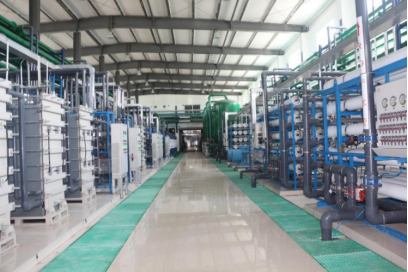

Tell us about your requirement

Price:
Quantity
Select Unit
- 50
- 100
- 200
- 250
- 500
- 1000+
Additional detail
Mobile number
Email

More Products in Water Treatment Technology Category
Production process and technology of distilled water and pure water
Price 10000.0 USD ($) / Unit
Minimum Order Quantity : 1 Unit
Diffusion dialysis - waste acid recovery technology
Price 1000.0 USD ($) / Plant
Minimum Order Quantity : 1 Plant
Diffusion dialysis - waste alkali recovery technology
Price 5000.0 USD ($)
Minimum Order Quantity : 1

 Send Inquiry
Our Products
- Chemical Technology Services and Consulting
- Industrial Membrane
- Factory Construction
- Water Treatment Plant
- Production technology of industrial chemicals
- Application technology of ionic membrane electrodi
- Water Treatment Technology
- Ion Membrane Technique
- Industrial Plant
- Industrial Chemical
- Production Processing Equipment
- Procurement Requirement

Room 1209, Block 14, Hengdafeicuihuating, No 82 Beixiwu Road, Sibaoshan Sub-district,Zibo - 250200, Shandong Sheng, China

Ms. Lynette
(Manager)
Mobile :+8613376439539
 Send Inquiry
Developed and Managed by Infocom Network Private Limited.
