
Call us now :
 Send Inquiry
 Send Inquiry
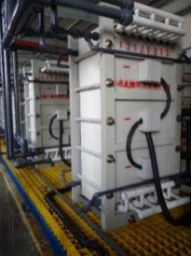
Acid treatment technology for foil industry
Acid treatment technology for foil industry Specification
- Max Foil Width
- 1650 mm
- Control System
- PLC controlled
- Cooling Method
- Water cooled
- Production Line Integration
- Compatible with standard foil rolling lines
- Acid Concentration
- Up to 5%
- Power Supply
- 380V / 50Hz
- Treatment Temperature Range
- 30°C - 70°C
- Usage
- Improves surface cleanliness and adhesion
- Automation Grade
- Automatic
- Surface Treatment
- Acid
- Reaction Time
- Adjustable, 0-10 min
- Application
- Acid treatment technology for foil industry
- Safety Features
- Emergency stop, acid leakage sensors
- Environment Compliance
- Meets local emission standards
Acid treatment technology for foil industry Trade Information
- Payment Terms
- Telegraphic Transfer (T/T), Letter of Credit (L/C)
- Sample Available
- No
- Main Export Market(s)
- Asia, Australia, Central America, North America, South America, Eastern Europe, Western Europe, Middle East, Africa
- Main Domestic Market
- All India
About Acid treatment technology for foil industry
In the process of foil corrosion, a large amount of waste acid is produced. The discharge of these waste acids (even if neutralized by lime) not only causes a waste of resources, increases the cost of products, but also leads to serious environmental pollution, affecting and restricting the survival and development of enterprises. Taking a medium-sized low-voltage electrode foil production enterprise as an example, it emits 15-20% of 30 tons of waste hydrochloric acid every day, which is equivalent to wasting 15-20 tons of 31% of finished acid. Using diffusion dialysis technology, the hydrochloric acid can be effectively recovered, and the economic benefits generated by saving hydrochloric acid are more than 200,000 yuan per month, while also solving the environmental pollution problem, and the economic and social benefits are very good.
Premium Acid Treatment for Foil Enhancement
Upgrade your foil production with our state-of-the-art acid treatment system, engineered for maximum efficiency, reliability, and safety. Suitable for handling foils up to 1650 mm wide, this system ensures superior surface cleanliness and improved adhesion properties. It seamlessly integrates with existing foil rolling lines, making it an ideal choice for manufacturers seeking operational excellence and environmental compliance.
Intelligent Automation and Safety
Leveraging PLC technology, this acid treatment solution delivers precise control over every aspect of the process, from temperature and reaction time to acid concentration levels. The automated system is equipped with vital safety measures, such as emergency stop functions and acid leakage sensors, ensuring operator protection and consistent output quality while complying with local emission standards.
FAQ's of Acid treatment technology for foil industry:
Q: How does the acid treatment technology improve foil surface properties?
A: The acid treatment process removes surface contaminants and impurities from the foil, enhancing its cleanliness and promoting stronger adhesion for subsequent processing. This results in higher product quality and better performance in downstream applications.Q: What is the maximum width of foil that can be processed with this system?
A: This system accommodates foil widths of up to 1650 mm, making it suitable for a wide range of industrial requirements within the foil manufacturing sector.Q: When should acid treatment be applied during foil production?
A: Acid treatment is typically integrated after rolling operations and before final finishing or coating stages to ensure the foil surface is optimally clean for adhesion or further processing.Q: Where can this acid treatment technology be integrated within a production facility?
A: The equipment is designed to seamlessly fit into standard foil rolling lines, allowing for easy installation and operation within existing or new production setups.Q: What controls and adjustments are available for treatment parameters?
A: The PLC-controlled system allows users to customize treatment temperature (30C-70C), reaction time (0-10 minutes), and acid concentration (up to 5%), ensuring flexibility for diverse process requirements.Q: What are the safety and environmental features of this acid treatment system?
A: Safety is ensured with emergency stop mechanisms and acid leakage sensors, while water-cooling maintains operational temperatures. The system also complies with local emission standards, making it environmentally responsible.Q: What are the primary benefits for manufacturers using this technology?
A: Manufacturers benefit from improved product quality, enhanced operational efficiency, reduced manual intervention, and reliable compliance with environmental and safety regulations. This leads to greater competitiveness and reduced production risks.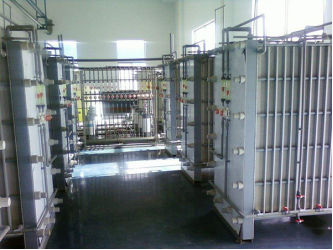


Tell us about your requirement

Price:
Quantity
Select Unit
- 50
- 100
- 200
- 250
- 500
- 1000+
Additional detail
Mobile number
Email

More Products in Application technology of ionic membrane electrodi Category
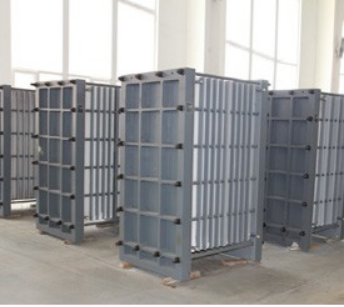
Industrial Diffusion Dialysis - Waste Acid Recovery Technology
Price 1000.0 USD ($)
Minimum Order Quantity : 1
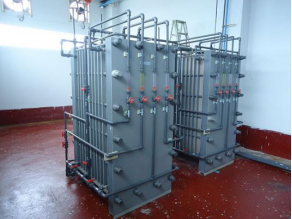
Diffusion Dialysis - Waste Alkali Recovery Technology For Separation and Recovery of Acid/ Alkali Waste Solutions
Price 1000.0 USD ($)
Minimum Order Quantity : 1
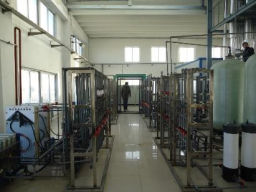
Application technology of bipolar membrane electrodialysis
Price 1000.0 USD ($)
Minimum Order Quantity : 1

 Send Inquiry
Our Products
- Chemical Technology Services and Consulting
- Industrial Membrane
- Factory Construction
- Water Treatment Plant
- Production technology of industrial chemicals
- Application technology of ionic membrane electrodi
- Water Treatment Technology
- Ion Membrane Technique
- Industrial Plant
- Industrial Chemical
- Production Processing Equipment
- Procurement Requirement

Room 1209, Block 14, Hengdafeicuihuating, No 82 Beixiwu Road, Sibaoshan Sub-district,Zibo - 250200, Shandong Sheng, China

Ms. Lynette
(Manager)
Mobile :+8613376439539
 Send Inquiry
 Call Me Free
Developed and Managed by Infocom Network Private Limited.
