
Call us now :
 Send Inquiry
 Send Inquiry
Ultrafiltration system(UF)
Ultrafiltration system(UF) Specification
- Usage & Applications
- Drinking Water, Effluent Treatment, Pre-RO Filtration, Waste Water Recycling
- Water in conductivity
- <2000 S/cm
- Technology
- Hollow Fiber / Spiral Wound Membrane
- Pump Type
- Centrifugal / Multistage Pump
- Water Out Conductivity
- <20 S/cm
- Ph Level
- 6.5 - 8.5
- Noise Level
- Low (<70 dB)
- Frequency
- 50/60 Hz
- Feature
- Low Maintenance, High Filtration Efficiency, Compact Design
- Recycle Rate
- Up to 95%
- Efficiency (%)
- >98%
- Flow Rate
- 500 LPH to 100 m3/hr
- Power Consumption
- 1-10 kW, depending on capacity
- Material
- SS / FRP / PVC
- Volume
- Customizable
- Power Source
- Electric
- Automatic Grade
- Automatic
- Drive Type
- Electric Motor
- Purity Level
- Up to 99%
- Water Source
- Borewell, River, Municipal, Surface Water
- Product Type
- Ultrafiltration System
- Voltage
- 220-440 V
- Filter Type
- Hollow Fiber/Spiral Wound Membrane
- Capacity
- 500 LPH to 100 m3/hr
- Installation Type
- Skid Mounted / Floor Mounted
- Connection Type
- Flanged/Threaded end
- Operation Temperature
- 5C 45C
- Cleaning Process
- CIP (Clean-In-Place) supported
- Skid Material
- Stainless Steel/FRP
- Backwash Facility
- Available (Automatic/Manual)
- Control Panel
- PLC based / Digital
- Service Support
- On-site/Remote technical support
- Pre-Filtration Requirement
- 20-50 micron
- Inlet Turbidity
- 20 NTU
- Membrane Pore Size
- 0.01-0.1 micron
- Permeate Recovery
- 90-95%
- Dimension
- Customized as per requirement
- Operating Pressure
- 1-6 bar
- Compliance
- Meets IS:10500 & WHO drinking water standards
Ultrafiltration system(UF) Trade Information
- Payment Terms
- Telegraphic Transfer (T/T), Letter of Credit (L/C)
- Sample Available
- No
- Main Export Market(s)
- Australia, Central America, North America, South America, Asia, Eastern Europe, Western Europe, Middle East, Africa
- Main Domestic Market
- All India
Ultrafiltration system(UF) About
Ultrafiltration (UF) is a kind of membrane filtration between microfiltration and nanofiltration. Ultrafiltration membrane is separated by the principle of screening, which is generally characterized by the interception of molecular weight in practical applications, and is mainly used to separate macromolecules, colloids and particles in solution from small molecular substances such as solvents. It is optional for organic matter with molecular weight from 10,000-100,000 Dalotn and is suitable for the separation, concentration and purification process of macromolecular substances and small molecular substances. The ultrafiltration membrane is an asymmetric membrane composed of a separating cortex and a spongy support layer, which is impenetrable to polymer substances, colloids, particles, bacteria and viruses, while water molecules, ions and small molecular weight substances can pass through, so as to achieve material separation.
Application fields: food industry (dairy, wine, gelatin, polysaccharide, etc.), biological fermentation engineering, beverage industry, plant extraction, pharmaceutical industry, biological preparations, metal processing, wastewater treatment and reuse (sugar-containing wastewater, electroplating wastewater, etc.), water treatment, etc.
Superior Filtration Efficiency
Utilizing hollow fiber or spiral wound membranes with a pore size of 0.01-0.1 micron, the UF system achieves filtration efficiencies greater than 98%. This ensures removal of turbidity, microorganisms, and fine particulate matter, delivering purified water that meets IS:10500 and WHO drinking water standards.
Versatile and Customizable Design
The UF system is available in capacities ranging from 500 LPH to 100 m3/hr, with dimensions tailored to site requirements. Transported as skid-mounted or floor-mounted units and constructed in stainless steel, FRP, or PVC, these systems can handle various industrial and municipal applications with minimal space requirements.
User-Friendly Operation and Maintenance
Equipped with a PLC-based digital control panel and supporting both automatic and manual backwash, the UF system prioritizes operational simplicity and longevity. The Clean-In-Place (CIP) cleaning feature and on-site/remote technical support further ensure low downtime and high system reliability.
FAQ's of Ultrafiltration system(UF):
Q: How does the Ultrafiltration system achieve high water purity?
A: The UF system utilizes hollow fiber or spiral wound membranes with pore sizes between 0.01 and 0.1 micron, effectively removing suspended solids, microorganisms, and particulate contaminants. This ensures water purity levels up to 99%, complying with IS:10500 and WHO standards for drinking water.Q: What applications can the UF system be used for?
A: This system is ideal for drinking water supply, effluent treatment, pre-RO filtration, and wastewater recycling. It is adaptable for use with borewell, river, municipal, and surface water sources and is suitable for industrial, municipal, and commercial installations.Q: When should the automatic or manual backwash system be used?
A: The backwash facility should be utilized when there is a noticeable increase in pressure drop or decrease in flow rate, indicating membrane fouling. The system can be set to perform regular automatic backwash or manually activated depending on site requirements and operating conditions.Q: Where can the UF system be installed?
A: The UF system supports both skid-mounted and floor-mounted installations, making it adaptable to treatment plants, industrial facilities, or any site with access to mains power (220-440V) and customizable space requirements.Q: What is the cleaning process for the UF membranes?
A: The system supports Clean-In-Place (CIP) procedures, allowing for chemical and water-based cleaning without dismantling. Regular CIP ensures optimal performance, extends membrane life, and minimizes maintenance interruptions.Q: How does the UF system help in water recycling and resource conservation?
A: With a permeate recovery rate up to 95% and a recycle rate of up to 95%, the UF system maximizes water reuse, reducing fresh water dependency and promoting sustainable water management in industrial and municipal settings.Q: What are the benefits of choosing a PLC-based control panel in this system?
A: A PLC-based control panel provides precise, automatic control over filtration and cleaning processes, ensures real-time monitoring, and facilitates easy troubleshooting. This enhances operational reliability, ease of use, and system safety.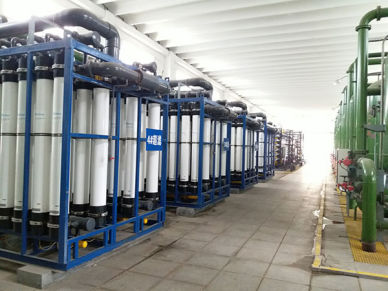
Tell us about your requirement

Price:
Quantity
Select Unit
- 50
- 100
- 200
- 250
- 500
- 1000+
Additional detail
Mobile number
Email

More Products in Production Processing Equipment Category

Alkali recovery diffusion dialyzer
Price 1000.0 USD ($)
Minimum Order Quantity : 1
Drive Type : Other, Electric Motor
Automatic Grade : Other, Automatic
Water Source : Other, Industrial Effluent, Caustic Wastewater
Recycle Rate : up to 95%
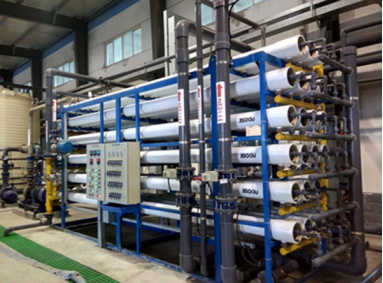
Reverse osmosis system
Price 1000.0 USD ($)
Minimum Order Quantity : 1
Drive Type : Electric
Automatic Grade : Full Automatic
Water Source : Other
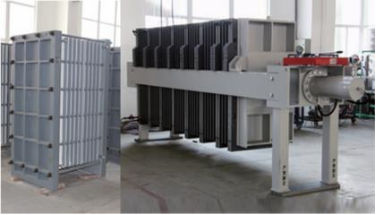
Acid recovery diffusion dialyzer
Price 1000.0 USD ($)
Minimum Order Quantity : 1
Drive Type : Electric
Automatic Grade : Full Automatic
Water Source : Other
Recycle Rate : 90%95%
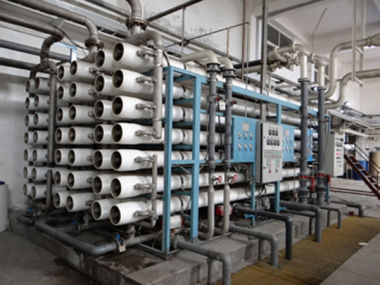
Nanofiltration system
Price 1000.0 USD ($)
Minimum Order Quantity : 1
Drive Type : Electric
Automatic Grade : Full Automatic
Water Source : Other

 Send Inquiry
Our Products
- Chemical Technology Services and Consulting
- Industrial Membrane
- Factory Construction
- Water Treatment Plant
- Production technology of industrial chemicals
- Application technology of ionic membrane electrodi
- Water Treatment Technology
- Ion Membrane Technique
- Industrial Plant
- Industrial Chemical
- Production Processing Equipment
- Procurement Requirement

Room 1209, Block 14, Hengdafeicuihuating, No 82 Beixiwu Road, Sibaoshan Sub-district,Zibo - 250200, Shandong Sheng, China

Ms. Lynette
(Manager)
Mobile :+8613376439539
 Send Inquiry
Developed and Managed by Infocom Network Private Limited.
