
Call us now :
 Send Inquiry
 Send Inquiry
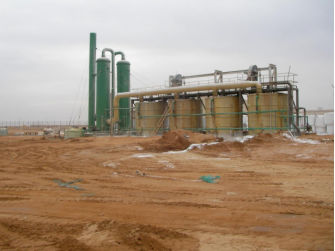
Calcium chloride production plant construction
Calcium chloride production plant construction Specification
- Molecular Formula
- CaCl2
- Chemical Name
- Calcium chloride
- Usage
- Calcium chloride: (1) The production of calcium chloride dihydrate by hydrochloric acid: Hydrochloric acid and limestone were put into the reaction tank according to a certain ratio, and the reaction was carried out under agitation to produce acid calcium chloride solution; Add lime milk to adjust the pH of feed liquid; The material liquid is filtered through the plate and frame filter press and clarified in the clarifying tank; After natural circulation evaporation in the single-effect evaporator, forced circulation evaporation in the two-effect evaporator, high temperature concentration in the three-effect evaporator, up to 68%, and then through the slicer for production, into sheet products; Then the belt conveyor enters the vibrating fluidized bed for drying. When the calcium chloride content reaches 70-74%, it is transferred to the roller cooler for cooling, and the packaging is stored. It has the characteristics of uniform and stable fluidization, easy maintenance, low noise, long equipment life, high thermal efficiency, good energy saving effect and so on. (2) The use of waste hydrochloric acid to produce anhydrous calcium chloride process: The by-product hydrochloric acid, waste acid and limestone were put into the reaction tank according to a certain ratio, and the reaction was carried out under agitation to produce acid calcium chloride solution; Add lime milk to adjust the pH of feed liquid; The material liquid is filtered through the plate and frame filter press and clarified in the clarifying tank; The clear liquid is sent into the spray tower to form a very fine mist liquid bead, and the filtered and heated air and flow contact, the water evaporates instantly, and the finished product is dried in a very short time. Through the cyclone powder collector and the cloth bag powder collector, the finished product is entered into the finished powder bin for measurement and packaging. It has the characteristics of fast drying speed, stable product, high purity, good quality, uniform particle, good fluidity, simple production process, convenient operation and control.
Calcium chloride production plant construction Trade Information
- Payment Terms
- Telegraphic Transfer (T/T), Letter of Credit (L/C)
- Sample Available
- No
- Main Export Market(s)
- Asia, Australia, Central America, North America, South America, Eastern Europe, Western Europe, Middle East, Africa
- Main Domestic Market
- All India
About Calcium chloride production plant construction
Calcium chloride production plant construction involves designing and developing a complete facility for manufacturing high quality calcium chloride. The plant can include raw material handling reaction systems filtration concentration drying cooling storage and packaging facilities based on the required product form and production capacity. Modern calcium chloride plants are designed to provide efficient processing consistent product quality and reliable operation. Calcium chloride is widely used in deicing dust control oil and gas applications water treatment construction chemicals and industrial processes. Proper plant planning includes equipment selection process design utility systems safety arrangements installation testing and commissioning. A professionally designed plant can help manufacturers achieve stable production reduce operating costs improve process efficiency and maintain consistent calcium chloride quality for different industrial applications.
FAQ
Q1 What is calcium chloride used for
It is used for deicing dust control water treatment construction and industrial applications
Q2 What does plant construction include
It includes equipment process systems installation testing and commissioning
Q3 Can production capacity be customized
Yes the plant can be designed according to required capacity product specifications and production needs

Tell us about your requirement

Price:
Quantity
Select Unit
- 50
- 100
- 200
- 250
- 500
- 1000+
Additional detail
Mobile number
Email

More Products in Factory Construction Category
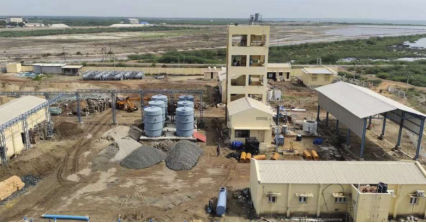
Bromine plant design and construction
Price 1000.0 USD ($)
Minimum Order Quantity : 1
Usage : 1st Stage a.Preliminary scheme of project process design. b.Complete the project site technical investigation and raw brine test. 2st Stage a.Process design drawings. b.Preparation of equipment list. c.Technical requirements for water, electricity, steam, etc. d.Automatic control point setting scheme and equipment list. 3st Stage Technical guidance for project equipment procurement. 4st Stage a.Technical guidance during project construction. b.Technical guidance for project equipment installation. 5st Stage a.Technical guidance of project equipment commissioning and trial operation. b.The production, operation and laboratory personnel of the project shall be trained and assessed before work. 6st Stage Ensure normal production for customers.
Chemical Name : Bromine
Application : Industrial, medicine, Organic Synthesis, Fertilizer, Pharmaceutical, Paints
Molecular Formula : Br
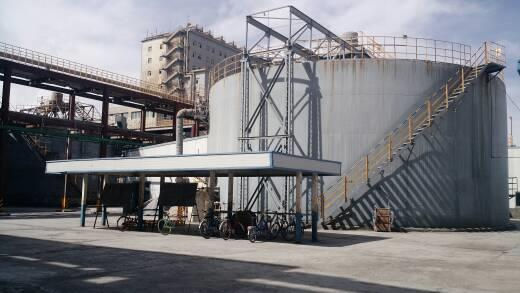
Alkali plant design and construction
Price 1000.0 USD ($)
Minimum Order Quantity : 1
Usage : Soda ash method: (1) Solvay process: Raw materials are salt, limestone, coke, ammonia. It has the advantages of convenient raw material source, good quality and low cost, and continuous production. (2) Joint soda production method: The complete industrial production method of soda ash proposed by the famous Chinese chemist Hou Debang in 1942. Solvay alkali industry and synthetic ammonia industry combined to produce both soda ash and ammonium chloride, with salt utilization rate up to 95%, no large amount of waste liquid, good quality, low cost, continuous production characteristics. The main raw materials are salt, ammonia, carbon dioxide. (3) Joint alkali new process method: This process method is based on years of practice by the company, summarizing the advantages and disadvantages of the Solvay method and the combined alkali process, and is an innovative new process for alkali production. In this process, the discharge of a large amount of waste liquid by Solvay process is abandoned and ammonium chloride is introduced into the combined alkali process to remix the pulp and steam ammonia. The company has developed and innovated complete sets of alkali making equipment matching the process, and its production capacity can reach 50,000 tons/year to 1 million tons/year.
Chemical Name : Caustic soda Soda ash
Application : Industrial
Molecular Formula : NaOH Na2CO3
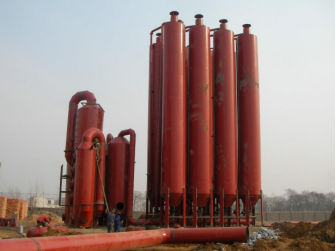
Calcium carbonate production plant construction
Price 1000.0 USD ($)
Minimum Order Quantity : 1
Chemical Name : Calcium carbonate
Molecular Formula : CaCO3
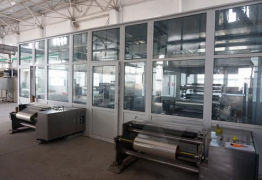
Homogeneous film production technology
Price 1000.0 USD ($)
Minimum Order Quantity : 1
Usage : Homogeneous membrane is a film directly made of polymer material with ion exchange groups, in which a chemical combination occurs between polyelectrolyte and filmforming polymer material, and becomes one, or the polymer filmforming material itself has ion exchange groups, and constitutes a filmlike polyelectrolyte, which is an ion exchange membrane with uniform chemical composition in the membrane, and its electrochemical and physical properties are good. It has become an important direction for the development of ion exchange membranes. Homogeneous membrane electrodialysis is a combination of ion exchange resin and film formation. There is only one phase state in the membrane structure, and there is no phase interface. The distribution of ion exchange groups in the membrane is uniform and continuous. With the higher and higher requirements for product material quality and energy consumption in various industries, the superiority of homogeneous membrane electrodialysis has become more and more apparent, and the material liquid treated by homogeneous membrane electrodialysis can better meet the requirements of customers. Homogeneous membrane electrodialysis can meet the processing requirements of various materials and liquids, and has the characteristics of small membrane surface resistance, high current efficiency, low energy consumption, good selectivity and high yield. Mainly used in material separation, high salinity zero discharge; Such as amino acid desalting purification, medical intermediates desalting and power plant sulfurcontaining wastewater desalting concentration; The homogeneous membrane electrodialysis method can effectively remove all kinds of inorganic salts in the material and achieve a better separation and purification effect. Homogeneous membrane has a wide range of application markets in the fields of seawater desalination, industrial wastewater, medical wastewater, medical water treatment, food fermentation, chemical technology and so on, with high social and economic benefits.
Application : Oil Industry, Industrial, medicine, Organic Synthesis, Fertilizer, Pharmaceutical, Water Treatment, Printing Industry

 Send Inquiry
Our Products
- Chemical Technology Services and Consulting
- Industrial Membrane
- Factory Construction
- Water Treatment Plant
- Production technology of industrial chemicals
- Application technology of ionic membrane electrodi
- Water Treatment Technology
- Ion Membrane Technique
- Industrial Plant
- Industrial Chemical
- Production Processing Equipment
- Procurement Requirement

Room 1209, Block 14, Hengdafeicuihuating, No 82 Beixiwu Road, Sibaoshan Sub-district,Zibo - 250200, Shandong Sheng, China

Ms. Lynette
(Manager)
Mobile :+8613376439539
 Send Inquiry
Developed and Managed by Infocom Network Private Limited.
