Call us now :
 Send Inquiry
 Send Inquiry
Application technology and production of ionic membrane
Price 1000.0 USD ($)/ Unit
MOQ : 1 Unit
Application technology and production of ionic membrane Specification
- Energy Consumption
- 2200~2600 kWh/ton NaOH
- NaOH Product Concentration
- 32~35%
- Control System
- PLC automatic
- Cell Structure
- Zero-gap configuration
- Technology Type
- Ionic Membrane Electrolysis
- Production Capacity
- 10~1000 t/d
- Current Density
- 2~4 kA/m²
- NaCl Brine Concentration
- 300~320 g/L
- Installation Mode
- Modular/Skid-mounted
- Membrane Material
- Perfluorinated Ion Exchange Membrane
- Main Product
- High-purity Sodium Hydroxide
- By-products
- Chlorine, Hydrogen
- Operating Temperature
- 85~90°C
- Catholyte pH
- 12~14
- Membrane Lifetime
- 3~5 years
- Dechlorination Efficiency
- >99.8%
- Anolyte pH
- 2~4
- Operating Pressure
- 0.18~0.25 MPa
- Product Purity (NaOH)
- >99.5%
- Maintenance Cycle
- Annual shutdown maintenance
Application technology and production of ionic membrane Trade Information
- Minimum Order Quantity
- 1 Unit
- Payment Terms
- Telegraphic Transfer (T/T), Letter of Credit (L/C)
- Sample Available
- No
- Main Export Market(s)
- Asia, Australia, Central America, North America, South America, Eastern Europe, Western Europe, Middle East, Africa
- Main Domestic Market
- All India
- Certifications
- Our technologies and products have many application needs in multiple industries and scenarios:
Application technology and production of ionic membrane About
The company is supported by a number of national scientific research centers in China, has a scientific research team composed of senior manufacturing industry experts, has a wealth of patented technology, and can complete the construction tasks of customers at a high level. We have rich technology in ion membrane, can provide different membrane application solutions according to customer needs, can provide ion exchange membrane, homogeneous membrane, diffusion dialysis membrane, bipolar membrane and other special membrane production technology and equipment. Our technologies and products have many application needs in multiple industries and scenarios:
Cutting-Edge Electrolysis Technology
Benefit from the latest in ionic membrane electrolysis, engineered for consistent high-purity sodium hydroxide output. The zero-gap configuration improves current efficiency, while perfluorinated membranes extend service life and lower long-term costs. Automated PLC controls ensure stable, optimized operations for enhanced safety and product quality.
Flexible and Scalable Production
Designed to accommodate a wide range of production scales, this technology is suitable for small- to large-scale plants, supporting outputs from 10 to 1000 tons of NaOH per day. Modular and skid-mounted installation allows for quick commissioning and straightforward scalability, perfect for distributors, exporters, manufacturers, suppliers, and traders.
Environmentally Responsible and Cost-Effective
With a dechlorination efficiency of over 99.8%, the process minimizes chlorine emissions and environmental impact. Annual maintenance ensures long-term stability, while energy consumption remains competitive at 2200-2600 kWh per ton of NaOH produced, resulting in lower operational costs and sustainable manufacturing.
FAQ's of Application technology and production of ionic membrane:
Q: How does the ionic membrane electrolysis process produce high-purity sodium hydroxide?
A: This process utilizes perfluorinated ion exchange membranes in a zero-gap cell structure, enabling efficient separation and conversion of brine (NaCl) into high-purity NaOH, chlorine, and hydrogen while maintaining product purity above 99.5%.Q: What makes the system environmentally friendly and efficient?
A: The technology achieves over 99.8% dechlorination efficiency, reducing chlorine emissions. It also operates at optimized temperatures and pressures while keeping energy consumption between 2200-2600 kWh per ton of NaOH, ensuring both environmental protection and operational savings.Q: When should maintenance be performed on the ionic membrane system?
A: A complete maintenance cycle is recommended annually, typically during a scheduled shutdown. This routine helps sustain optimal performance and extends the membrane's lifespan of 3 to 5 years.Q: Where can this modular/ skid-mounted electrolysis plant be installed?
A: Thanks to its modular and skid-mounted design, the plant is versatile for installation in varying industrial settings, including existing factories or new facilities, and is especially suitable for flexible expansion or export applications.Q: What by-products are generated, and how can they be utilized?
A: In addition to sodium hydroxide, the process produces chlorine gas and hydrogen as valuable by-products, which can be further processed or sold for various industrial uses, enhancing overall economic benefits.Q: How is the production process controlled and monitored?
A: A PLC (Programmable Logic Controller) automatic control system oversees all key parameters, including pH, pressure, temperature, and product concentration, ensuring safe, reliable, and consistent plant operation.Q: What are the main benefits of using a perfluorinated ion exchange membrane and zero-gap cell structure?
A: These features provide higher durability, chemical resistance, reduced energy losses, and increased membrane lifetime, all contributing to superior product quality and lower overall production costs.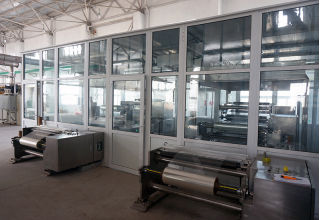


Tell us about your requirement

Price:
Quantity
Select Unit
- 50
- 100
- 200
- 250
- 500
- 1000+
Additional detail
Mobile number
Email

More Products in Chemical Technology Services and Consulting Category

Chemical products production technology consulting
Price 1000.0 USD ($) / Piece
Minimum Order Quantity : 1 Piece

 Send Inquiry
Our Products
- Chemical Technology Services and Consulting
- Industrial Membrane
- Factory Construction
- Water Treatment Plant
- Production technology of industrial chemicals
- Application technology of ionic membrane electrodi
- Water Treatment Technology
- Ion Membrane Technique
- Industrial Plant
- Industrial Chemical
- Production Processing Equipment
- Procurement Requirement

Room 1209, Block 14, Hengdafeicuihuating, No 82 Beixiwu Road, Sibaoshan Sub-district,Zibo - 250200, Shandong Sheng, China

Ms. Lynette
(Manager)
Mobile :+8613376439539
 Send Inquiry
Developed and Managed by Infocom Network Private Limited.
